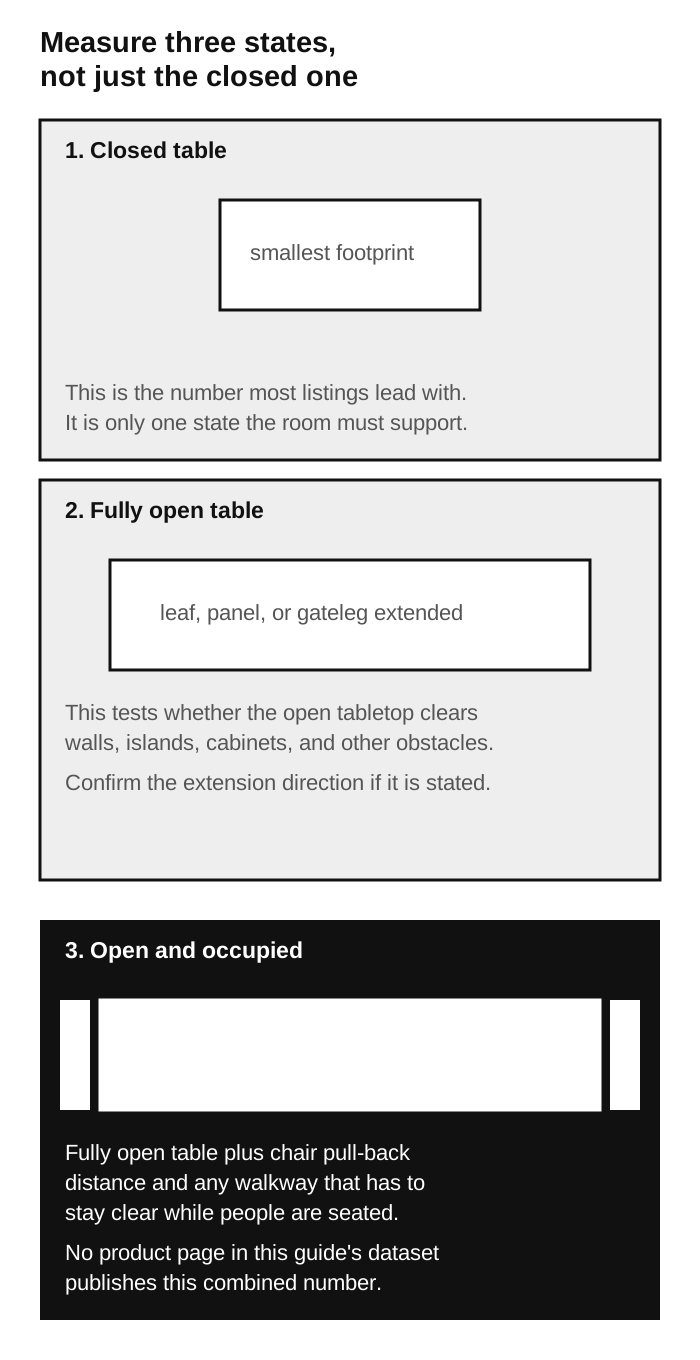
An extendable dining table has to work in both its closed and expanded states. A table that measures compact in a showroom photo can still fail the room it’s going into, because the tabletop grows before chairs and people use even more floor space around it. The closed dimension is only one of three states you need to measure.
This guide draws on 21 inspected official product pages, captured and audited October 1, 2026. It owns one search term, “extendable dining table,” and the room-fit decision around it. It does not rank brands, and it does not cover table mechanism engineering, repair, or how to extend a table once you own it. Where a product page doesn’t publish a figure, this guide marks it unstated instead of estimating one from a photo or a seat-count label.
The short answer: measure three states, not one
Every extendable table decision depends on three separate measurements, not one:
- Closed table. The length, width, and (where published) height with no leaf or extension deployed. This is the number most listings lead with.
- Fully opened table. The published span on the changing axis, the other tabletop axis, and height where stated, with every leaf, panel, or gateleg extension in use.
- Opened table with occupied chairs and circulation. The fully opened table plus the floor space chairs need to be pulled out and sat in, plus any walkway that has to stay clear while the table is set up for a meal.
A simple planning model: required length is the open table length plus end-chair zones plus any passage you need past the ends; required width is the table width plus side-chair zones plus any passage along the sides. This is an editorial planning model for thinking through the problem, not a universal building-code clearance standard, and it does not replace measuring your own chairs and room.
What “room needed” actually includes
Tabletop
The tabletop itself has a closed span, expanded span, the non-expanding axis, and height where published. Across the 21 official pages inspected for this guide, every page published the closed and expanded span on the axis that changes. The label for that axis was not consistent: records used length, width, or diameter. Compass explicitly labels both states as diameters; the retained SKANSNÄS and ROSENTORP titles give a closed span and expanded long axis without establishing a second open axis or final shape. Height is a different story: only 8 of 21 retained an explicit quoted height. A height value was captured without an exact quote for the 13 IKEA records, so this guide does not publish those heights as confirmed facts.
Chairs
A chair’s depth, the width it needs to be pulled out and sat in, and whether it has to move before the table extends are all separate from the tabletop’s own dimensions. A table that measures fine on paper can still fail if the chairs around it can’t be pulled back far enough to sit down once the table is extended toward them.
Circulation
The floor space behind a seated person, the route to the kitchen, and the path to any door all have to stay usable while the table is in its open, occupied state, not just while it’s pushed closed against a wall. A route that looks clear when the table is closed can disappear entirely once the table is extended and someone is seated at the end of it, especially in a room where the dining zone doubles as the main path between the kitchen and the rest of the home.
Fixed obstacles
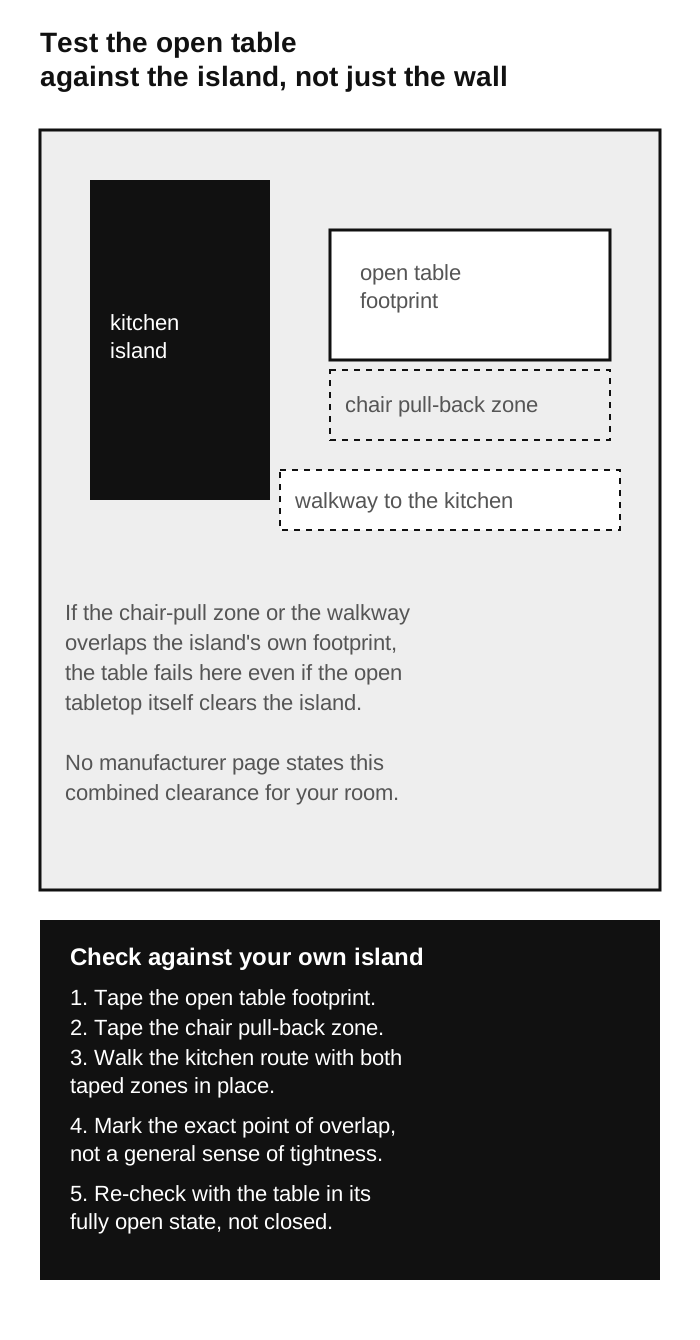
An island, a cabinet, a radiator, a support column, a door swing, or a rug edge can all sit exactly where the open table or a pulled-out chair needs to go. None of these show up in a product photo of the table alone, and none of them are the table’s fault; they are specific to your room, which is exactly why no single published number from a manufacturer can substitute for measuring your own space against your own obstacles.
Compare closed and opened dimensions, not seat counts
A seat count on a label, like “seats 4 to 6,” describes how many places a brand expects you to set, not how much room those places need. Brands do not publish one shared place-setting or circulation standard behind those labels. Treat the seat count as shorthand and the closed/open dimensions as the actual tabletop facts.
Rectangular tables with one changing axis
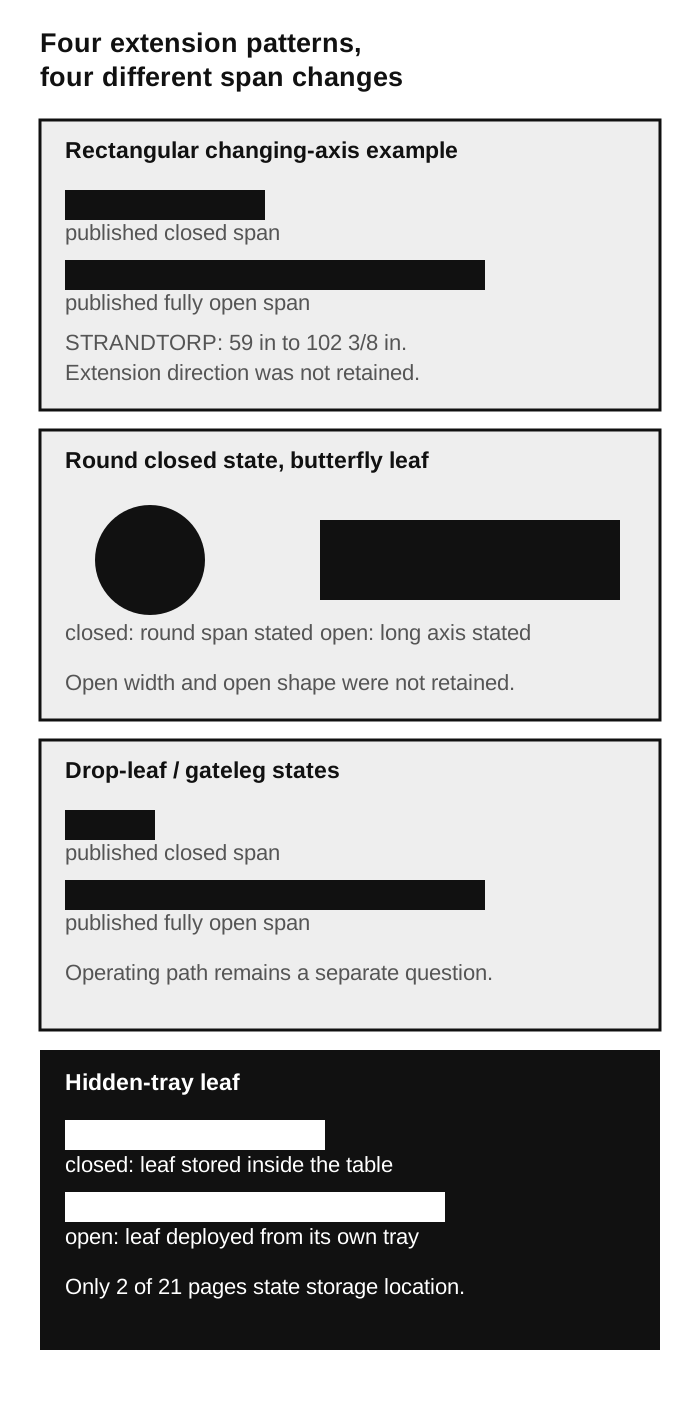
Most of the IKEA models inspected here (TONSTAD, VIHALS, ÅLHULT, NÄSINGE, KÄRSKÄR, STRANDTORP, TARSELE) publish a closed span, an open span, and one constant tabletop axis. IKEA’s ÅLHULT closes at 47 1/4 inches and opens to 66 7/8 inches; STRANDTORP closes at 59 inches and opens to 102 3/8 inches with both leaves. Those figures let you tape the two tabletop rectangles accurately. They do not, by themselves, identify which part moves or which end changes during conversion.
Round when closed, open width unresolved
IKEA’s SKANSNÄS and ROSENTORP publish a round closed state and describe a butterfly leaf, but the retained title strings provide only the closed span and the expanded long axis. No separate open width or explicit open-shape label was retained, so this guide leaves both unresolved. Expand Furniture’s Compass is different: its spec explicitly labels both 49.6 inches closed and 67 inches expanded as diameters, so both axes of its expanded tabletop are documented. Keep the seller’s exact dimension labels instead of supplying an open shape or second axis that the source did not state.
Gateleg and drop-leaf states
IKEA identifies NORDEN and PINNTORP as gateleg tables, and DANDERYD as a drop-leaf table with “no leaves, one leaf, or two” as three described states. NORDEN’s title publishes 10 1/4 inches closed, 35 inches in its middle state, and 59 7/8 inches fully open. DANDERYD describes three states but does not attach a separate number to its one-leaf middle state in the retained quote. Use only the state dimensions the page actually gives; the names alone do not establish an operating path or required wall clearance.
Hidden-tray and self-storing leaf designs
Burrow’s Serif stores its leaf in a hidden tray built into the table itself, and the brand states this directly: a leaf that “expands the table to accommodate up to eight people,” with “the clever hidden tray that stores the leaf when not in use.” This is one of only two records in this set with leaf storage confirmed in a quoted sentence, the other being IKEA’s TARSELE, which states its leaf “hides” inside the tabletop. This guide does not claim any single storage method is superior; it only distinguishes which pages actually say where the leaf lives when the table is closed.
The operating footprint most listings never publish
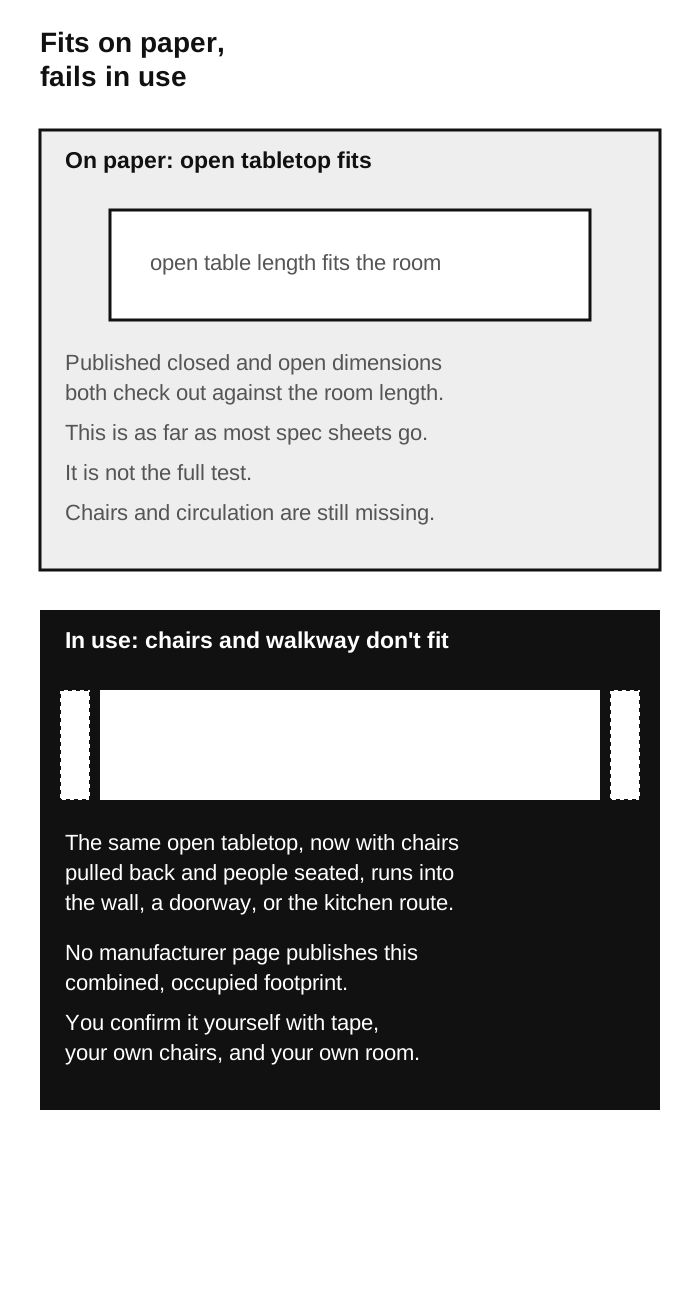
The operating footprint is the tabletop’s open length and width, plus the floor space the pulled-out chairs and any circulation route need, all measured at once, in the open, occupied state. No table’s own product page in this dataset publishes that complete combined number. What they publish are the tabletop’s own open dimensions; the chair and circulation space is always left to the buyer.
Treat that as three measurement layers. The published open tabletop is layer one and can be checked against walls, islands, and cabinets. Your actual chairs in a pulled-back position are layer two. The route people still need to walk is layer three. A table passes the room only when all three layers work at the same time. A seat-count label cannot fill in either missing layer because it does not specify your chair depth, body position, or required route.
Worked example: Burrow’s Serif Extendable Dining Table closes at 59 inches long and opens to 78.75 inches, a 19.75-inch increase, with width and height staying constant at 34.5 and 29.75 inches. If a room has 90 inches clear in the extension direction, the tabletop itself passes, but the occupied state remains unresolved until you add your actual chairs and required route. A room with exactly 78.75 inches fails only if your planned setup needs occupied end chairs or passage beyond the table ends.
Published closed and open dimensions establish the two final tabletop states, not the motion between them. This audit did not retain a comparable operating-path field across the 21 models. If a product page does not explicitly explain the conversion action, mark that action unresolved and confirm it from the manufacturer’s instructions, a showroom demonstration, or a direct retailer answer before committing to a tight placement.
How to measure your own room
- Measure the usable dining zone first, excluding the swept area of any door, the island’s own footprint, and any fixed cabinet run.
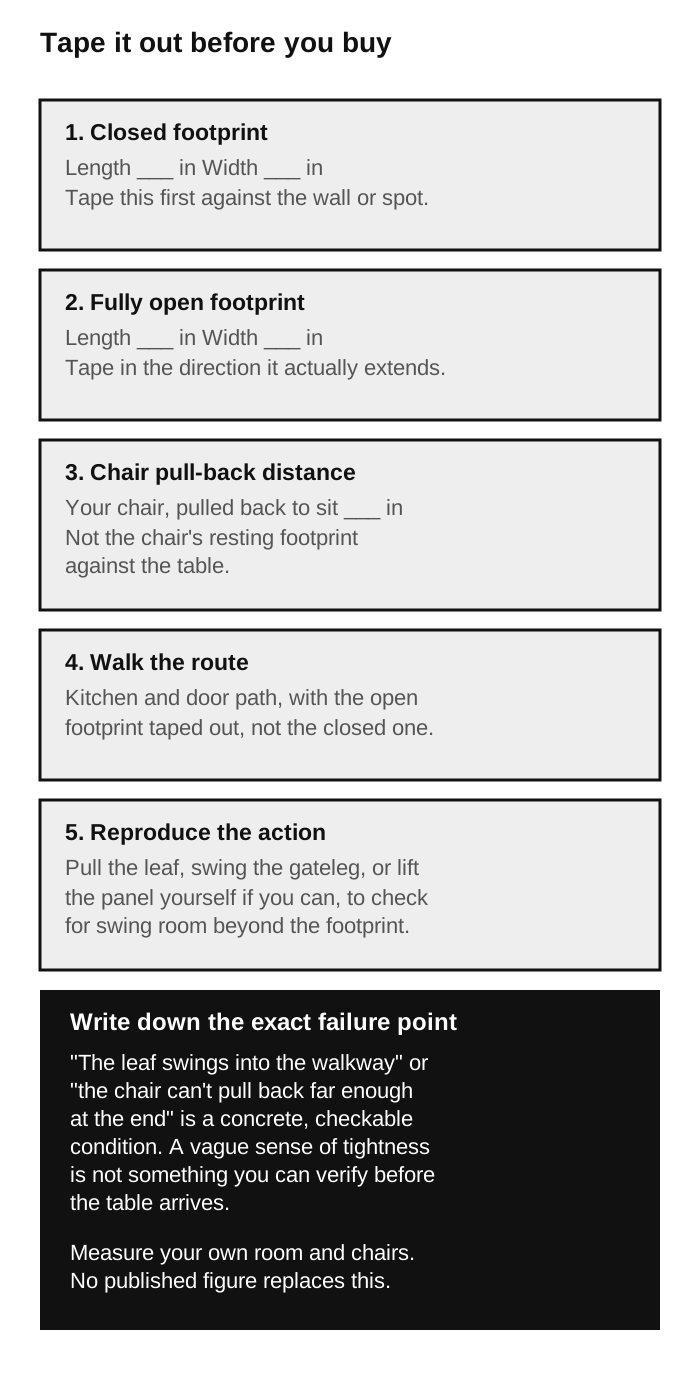
- Mark the table’s published closed footprint on the floor with tape.
- Mark the table’s published fully open footprint with tape, in the direction the leaf or leg actually extends.
- Add your actual chair depth, pulled back to a sitting position, not the chair’s resting footprint against the table.
- Walk the route to the kitchen and to the nearest door with the taped-out open footprint in place, not just the closed one.
- If you can, reproduce the actual extension action (pulling a leaf out, swinging a gateleg, lifting a self-storing panel) to confirm it doesn’t need more swing room than the open footprint alone suggests.
- Record the specific condition that would make the table fail in your room, such as “the leaf swings into the walkway” or “the chair can’t be pulled back far enough at the end,” so you’re checking a concrete failure mode, not a vague sense of tightness.
Delivery, assembly, and the box it ships in
How a table arrives is a separate question from how it fits once it’s there, but it still affects whether the room-fit plan survives delivery day. Only 2 of the 21 pages inspected for this guide publish an assembly or packaging detail in a quoted sentence. Burrow states its Serif table has “breezy assembly that comes together in minutes” and “ships in easy-to-handle boxes,” explicitly adding that you “won’t even need to break out the tool box.” Castlery’s Seb page states packaging as a single box. Neither claim generalizes to the other 19 models in this dataset; where a page doesn’t state assembly or packaging, this guide records it as unstated rather than assuming a similarly easy setup.
How much extra room does the extension actually add?
Added span is the expanded figure minus the closed figure on the same published axis, and it is not the same as the room needed once the table is occupied. STRANDTORP grows from 59 inches to 102 3/8 inches, a 43 3/8-inch increase. NORDEN’s gateleg states grow from 10 1/4 inches folded to 59 7/8 inches fully open, a 49 5/8-inch change. Expand Furniture’s Junior Giant changes from a roughly 17-inch console depth to 106 inches fully extended with all five leaves, a different console-to-dining category rather than a typical single-leaf table.
Sort candidates only by what’s actually published: smallest closed footprint, greatest fully open length, smallest confirmed operating footprint (tabletop plus chair and circulation space you’ve verified yourself), or incomplete data where a needed figure isn’t stated. This guide does not rank these as “best”; the right starting point depends entirely on which constraint your room has.
Choose by the room constraint you actually have
| Constraint | Check this first |
|---|---|
| Narrow dining zone | Closed width and whether a chair can be pulled out on the tight side at all |
| Short room (end to end) | Fully open length and which end the leaf extends toward |
| Table placed against a wall | Both published tabletop states against the usable wall zone; treat the conversion action as unresolved unless explicitly stated |
| Island nearby | Fully open width plus the chair route between the table and the island |
| Hard cap on end-to-end room length | The verified fully open span, not the seat-count label |
| Very small everyday dining zone | The smallest published closed footprint that still leaves the required route usable |
Seven representative tables from the source audit
The table below is a specification audit, not a ranking. Every figure comes from the brand’s own official product page, captured October 1, 2026. Not stated means the inspected page did not publish that field in a quoted sentence; it does not mean the feature doesn’t exist.
| Product · source | Shape/mechanism | Closed span | Expanded span | Other tabletop axis | Height |
|---|---|---|---|---|---|
| IKEA — TONSTAD · brand-listed | Rectangular; extends 4 to 6 seats | 55 1/8 in | 77 1/8 in | 33 1/2 in | Not stated |
| IKEA — NORDEN · brand-listed | Gateleg table with drawers | 10 1/4 in | 59 7/8 in (middle state at 35 in) | 31 1/2 in | Not stated |
| IKEA — SKANSNÄS · brand-listed | Round closed state; butterfly leaf; open shape not stated | 45 1/4 in diameter | 66 7/8 in (expanded long axis; open width not stated) | Not stated (open) | Not stated |
| Burrow — Serif · brand-listed | Rectangular, hidden-tray leaf | 59 in | 78.75 in | 34.5 in (constant) | 29.75 in (constant) |
| Joybird — Haven · brand-listed | Rectangular, brand’s own “w” range | 70.5 in (expanding axis labeled “w”) | 90.5 in (same axis) | 35.5 in D (constant) | 29.5 in (constant) |
| Expand Furniture — Compass · brand-listed, operation via quoted customer review | Expanding round tabletop | 49.6 in diameter | 67 in diameter | 67 in diameter | 30 in / 30.5 in (finish-dependent) |
| Castlery — Seb · brand-listed | Rectangular, 4-6 seater | 59 in | 78.7 in | 35.4 in (constant) | 29.5 in (constant) |
Across the full 21-model dataset this table draws from, all 21 published closed and expanded spans on the changing axis, 8 of 21 published an explicit quoted height, 8 of 21 published a seat count in a quoted sentence, and only 2 of 21 stated where the extension leaf stores when the table is closed. That is a sample-limited finding about these inspected pages, not a claim about the extendable-table market overall.
Fits on paper, fails in use
A table can pass the tabletop dimension check and still disappoint once it is set for a meal. The product pages in this dataset do not publish the chair pull-back distance or a complete tabletop-plus-chair-plus-route footprint. Test those missing layers in your room with tape and your own chairs. Keep the conversion action as a separate unresolved question whenever the manufacturer’s retained text does not describe it.
FAQ
How much space does an extendable dining table need?
It depends on the exact model’s closed length, fully open length, width, and your own chairs and walkways, none of which this guide can reduce to one universal number. Measure the table’s own published closed and open dimensions, then add your chair’s pulled-back depth and any circulation route before deciding it fits.
Can an extendable dining table sit against a wall?
The published closed and open footprints can show whether both final tabletop states fit beside a wall, but they do not necessarily show the conversion action. If the manufacturer does not state that action, do not assume the table can remain in exactly the same position while opening. Confirm the instructions or test the exact model before purchase.
Is round or rectangular better for a small room?
Neither is universally better. Compare the exact closed footprint and every explicitly published open axis for the models you are considering. If a round table’s page publishes only an expanded long axis and omits the open width or shape, leave those fields unresolved rather than assuming how the tabletop changes.
Do chairs need to move before the table opens?
The published dimensions alone cannot answer that. Tape the closed and open tabletop states, place the actual chairs in both plans, and check whether any chair occupies the added tabletop zone. If the conversion instructions are not published, confirm the action separately instead of inferring it from the table name or photos.
What if the open dimensions aren’t published?
Don’t estimate them from the seat-count label or the closed dimensions. Confirm the open length and width directly with the retailer or manufacturer before counting on the table fitting your room.
Final checklist
Before you buy, confirm each of the following for the exact model and finish:
- you have the published closed length, width, and (if stated) height;
- you have the published fully open length, width, and (if stated) height, not just the closed figures;
- you have marked the conversion action unresolved unless the manufacturer explicitly states how the table opens;
- you have added your actual chair’s pulled-back depth to the open footprint, not the chair’s resting footprint;
- you have walked the route to the kitchen and the nearest door with the open footprint taped out;
- you have not estimated an omitted open axis, open shape, or leaf storage location from a photo or a seat-count label;
- you have treated any “seats X” label as marketing shorthand, not a room-fit measurement.
An extendable dining table’s whole job is to change size. Measuring only the state it’s in on the showroom floor leaves the fully open and occupied states untested.
Browse the Tables & Desks That Change pillar for related comparisons, or see the small bedroom layout guide for how a dining or multi-use table fits into a whole room’s plan. See our Editorial Policy for how we separate published specifications from editorial judgment.